
Updated Nov 6, 2025 • ~8 min read
The Pacific Northwest rainforest smelled like secrets.
Willow Parker inhaled deeply as she hoisted her gear pack higher on her shoulders, the scent of wet earth and cedar filling her lungs. Moss. Pine. Rain that had fallen hours ago but still clung to everything, making the world feel ancient and untouched. This was it. This was where she belonged—not in some cramped apartment with a boyfriend who wanted her to “settle down,” not at her sister’s wedding last month where everyone asked when she’d find someone, definitely not at her mother’s house listening to lectures about dying alone.
Here. Alone. Free.
Her boots squelched in the mud as she picked her way through the undergrowth, scanning for the perfect spot to set up base camp. The assignment was simple: photograph endangered species in this remote section of forest for National Wildlife Magazine. Three weeks of solitude, her camera, and nature. Heaven.
She’d fought hard for this assignment. Reid, her editor, had wanted to send Thomas—married Thomas with his two kids and mortgage and boring, safe life. But Willow had argued that she was better, that she knew how to disappear into the wilderness in a way Thomas never could. That she’d get shots no one else would get.
And she’d been right. She always was when it came to this.
“Perfect,” she muttered, spotting a small clearing near a stream. The water was crystal clear, rushing over smooth stones worn down by centuries of current. Ferns the size of umbrellas created a natural privacy screen on one side, and a massive cedar tree stood sentinel on the other, its trunk so wide three people couldn’t have linked hands around it.
She dropped her pack with a grunt and immediately pulled out her camera, unable to help herself. The light filtering through the canopy was gorgeous, golden and green and alive. Dust motes danced in the shafts of sunlight, and somewhere nearby a bird was singing—a varied thrush, if she wasn’t mistaken.
She lifted the camera to her eye and started shooting.
This was what she was good at. Not relationships—her parents’ screaming matches followed by her father’s abrupt departure had taught her love was a trap, a cage that left you bitter and resentful. Not playing nice at family dinners where everyone pitied her for being single at twenty-eight, where her mother made pointed comments about biological clocks and dying alone. But this? Capturing the soul of the wild through a lens? This she could do. This made sense in a way people never did.
“Hey, Mr. Squirrel,” she said, focusing on a Douglas squirrel chattering at her from a nearby branch. “You gonna help me win a Pulitzer? No? Rude.”
Talking to animals was a habit she’d picked up somewhere along the way. They didn’t judge. Didn’t ask when she was going to get married or why she’d turned down two perfectly good proposals. They just existed, wild and free, like she wanted to be.
Though “perfectly good” was debatable. Brad had wanted her to quit photography and work at his father’s insurance firm. And Mike—sweet, boring Mike—had proposed after three months of dating because he was “ready to start a family” and thought she’d “fit the role nicely.” Like she was auditioning for a part in his carefully planned life.
No thanks.
She spent the next hour setting up her tent—a small, efficient two-person model (though she’d never shared it) that had been with her through assignments in Alaska, Montana, and the Amazon. The familiar routine was soothing. Stake the corners. Thread the poles. Secure the rainfly. Her satellite phone went in the waterproof bag, carefully wrapped and stowed. Sleeping bag unrolled, the down filling making a comfortable nest. Camera equipment secured in its protective case, though she kept one body and her favorite lens out and ready.
Just in case.
By the time the sun started sinking, casting long shadows through the ancient trees, Willow felt that familiar peace settle over her. This was better than any relationship. Better than the wedding she’d attended last month where her sister Emma had given her that pitying look while asking, “Don’t you ever get lonely?”
Willow had wanted to laugh. Lonely? She was surrounded by people in the city and felt completely alone. Out here, in actual solitude, she felt more connected than she ever did in crowded bars or at family dinners.
The irony wasn’t lost on her.
She was digging through her pack for the portable stove when the feeling hit her.
She wasn’t alone.
Willow froze, every instinct honed from years in the wilderness screaming at her. The forest had gone quiet. No birds. No rustling. The stream still burbled over its stones, but every other sound had just… stopped.
Like someone had pressed a mute button on the world.
Slowly, she straightened, her hand moving to the bear spray on her belt. Her father had drilled wilderness safety into her from childhood, back before he’d decided family life was too “restrictive” and left them all behind. One useful thing he’d given her: respect for nature’s dangers.
Nothing moved in the trees. But she could feel it—that prickling awareness at the back of her neck, the certainty that something was watching her. Something big.
“Hello?” Her voice sounded small in the massive forest, swallowed up by the cathedral of trees around her.
No response. Just that suffocating silence, broken only by water over stone.
Her heart started to pound. She’d been in dangerous situations before—she’d photographed grizzlies in Alaska, jaguars in the Amazon, wolves in Yellowstone. She knew what it felt like to be in the presence of an apex predator. Knew the particular tension that came from being near something that could kill you without effort.
This felt like that. But more. Heavier. More… intelligent, somehow.
She scanned the tree line, pulse racing in her ears. Black bears were common here, cougars too. But this felt different. Too deliberate. Too focused.
There—a flash of movement in the shadows between two massive cedars. Too large to be a deer. Too silent to be a bear. Bears crashed through the undergrowth. Whatever this was moved like smoke.
Willow’s breath caught.
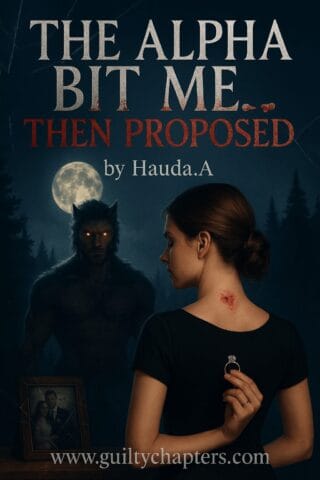
For just a second, she saw eyes. Amber-gold, glowing in the dying light. Large. Feline. Watching her with an intensity that made her skin prickle and her stomach do a strange flip that was half fear, half something she couldn’t name.
Beautiful, her photographer’s brain whispered. Absolutely beautiful.
Then they were gone.
She stood there for a long moment, pulse racing, hand still on the bear spray, waiting. But whatever it was didn’t reappear. The forest slowly came back to life—a bird called, something rustled in the undergrowth, the normal sounds of evening settling in.
“You’re imagining things,” she told herself firmly, turning back to her camp. “Just because you’re alone doesn’t mean you need to freak out. Probably just a curious cougar. Nothing to worry about.”
But her hands shook slightly as she set up the camp stove. And she kept glancing over her shoulder as she heated water for the freeze-dried pasta that would be her dinner.
Those eyes. God, those eyes.
She’d never seen anything like them. Too large for a cougar. Too intelligent. And the way they’d looked at her—not with a predator’s hunger, but with something that felt almost like… recognition?
“You’re being ridiculous,” she muttered, forcing herself to eat even though her appetite had vanished. “It’s an animal. Probably never seen a human before and was just curious. That’s all.”
But as she forced herself to finish setting up camp, organizing her gear with methodical precision, she couldn’t shake the feeling. Even as she brushed her teeth at the stream and washed her face in the cold water, she felt it.
Even as she crawled into her tent that night, camera beside her like always, flashlight in easy reach and bear spray next to her sleeping bag, she felt it.
Someone—something—was out there.
And it was watching her.
She lay in her sleeping bag for a long time, listening. The stream. The wind in the trees. The occasional call of a nightbird. All normal sounds. Nothing threatening.
But that feeling persisted. That awareness of being observed. Not threatened. Just… watched. Almost like the forest itself had claimed her, was keeping track of this new presence in its domain.
“Just a curious cougar,” she whispered into the darkness, trying to convince herself. “That’s all. Nothing scary. Nothing dangerous. Just nature being nature.”
But deep down, in a place she didn’t want to examine too closely, she knew she was lying to herself.
Because those eyes—those impossible, beautiful, intelligent eyes—hadn’t belonged to a cougar.
They’d belonged to something else entirely.
And as she finally drifted off to sleep, Willow couldn’t decide if she was terrified or intrigued.
Maybe both.
Definitely both.











































Reader Reactions