
Updated Oct 30, 2025 • ~11 min read
The blank page mocked her.
Samantha sat at her kitchen table on a Sunday morning, laptop open, cursor blinking in an empty document. She’d titled it “Untitled” because she didn’t know what else to call it. A journal? A memoir? A cautionary tale?
All of the above, maybe.
She’d woken up at 6 AM with words crowding her mind—observations, feelings, the story of the past three months demanding to be written. For weeks she’d been documenting evidence, taking clinical notes, building a legal case. But this was different. This was her story, not just facts and timestamps.
She started typing.
I should have known something was wrong when my therapist looked at my husband the way I used to look at him—like he was the most fascinating person in the world.
The words flowed faster than she expected, months of suppressed emotion pouring onto the page. She wrote about that first therapy session, Dr. Leigh’s charisma, the way Jared had lit up under her attention. She wrote about the slow realization, the necklace, the texts at 2 AM.
She wrote about what it felt like to be gaslit in therapy—to raise concerns about your marriage and be told you were too controlling, too anxious, too demanding. To doubt your own perceptions while sitting across from the woman who was sleeping with your husband.
Three hours later, she had five thousand words. Raw, unpolished, painfully honest.
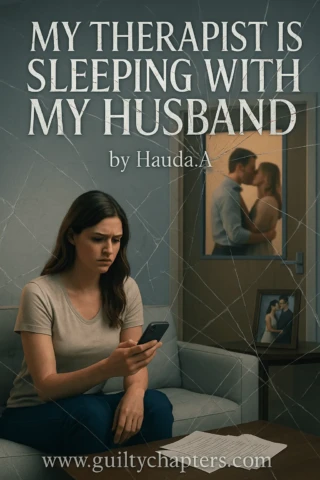
She saved the document and titled it: “My Therapist Stole My Husband.”
Then she closed the laptop and made coffee, her hands shaking slightly from the emotional exertion of reliving everything.
Her phone buzzed. Riley, texting at 9 AM on a Sunday.
Riley: Brunch at my place? I’m making frittata and I need to hear how you’re doing.
Samantha: Be there in an hour.
Riley’s apartment smelled like fresh herbs and butter when Samantha arrived. Her friend took one look at her and pulled her into a hug.
“You look exhausted,” Riley said.
“I’ve been writing.”
“Writing what?”
They settled at Riley’s small dining table with frittata and mimosas, and Samantha explained. The early morning wake-up, the compulsion to document everything, the catharsis of putting her experience into words.
“Can I read it?” Riley asked.
Samantha pulled up the document on her phone and handed it over. She watched Riley’s face as she read—the way her expression shifted from curiosity to anger to something that looked like awe.
When Riley finished, she set down the phone carefully. “Sam. This is incredible.”
“It’s just me processing.”
“No. It’s more than that.” Riley leaned forward, intense. “This is important. This is every woman who’s ever been gaslit by a professional they trusted. Every person who’s doubted their own instincts because someone in authority told them they were wrong. Every betrayed spouse who’s been made to feel crazy for noticing the obvious.”
“I wrote it for me. To help me understand what happened.”
“I know. That’s why it’s so powerful. It’s not revenge or venting—it’s you making sense of trauma.” Riley paused. “You need to share this.”
Samantha shook her head. “The newspaper article was enough. I told my story. I don’t need more attention.”
“This isn’t about attention. This is about helping people.” Riley pulled up something on her own phone. “Look at this.”
She showed Samantha a support forum for people who’d experienced professional misconduct. Thread after thread of people sharing stories about therapists, doctors, lawyers who’d abused their positions of trust.
“These people need to know they’re not alone,” Riley said. “They need to see someone who fought back and won. Someone who documented everything, who didn’t stay silent, who made the abuser face consequences.”
“I don’t know if I’m ready for that level of exposure.”
“You went on Good Morning Portland. You gave interviews to national outlets. You confronted them in a restaurant full of people. You’re already exposed.” Riley squeezed her hand. “But this time, you’d be controlling the narrative completely. Your words, your story, your terms.”
Samantha took back her phone and reread what she’d written. It was raw but honest. Painful but true. And maybe Riley was right—maybe sharing this could help others who’d lived through similar betrayals.
“Where would I even share it?” Samantha asked.
“Medium. Substack. Hell, just post it as a blog and share the link. The article from the Tribune already made you famous. People are searching for your name, looking for updates. Give them something worth reading.”
Samantha spent the rest of brunch thinking about it. After leaving Riley’s apartment, she drove to a bookstore downtown and browsed the memoir section. Read jacket copy about people who’d survived trauma and transformed it into narrative. People who’d taken their worst experiences and made them into something meaningful.
Could she do that?
At home, she opened her laptop and kept writing. Added context about the early months of her marriage, the slow deterioration, what it felt like to love someone who was slipping away. She wrote about the decision to seek therapy, the hope that it could save them, the crushing realization that therapy itself had become the weapon of their destruction.
She wrote about the evidence gathering—not the clinical documentation she’d shared with attorneys, but what it felt like emotionally. The nights spent awake, the constant anxiety, the way she’d had to split herself into two people: the oblivious wife and the investigator building a case.
She wrote about the restaurant confrontation, but from the inside. Not the viral video everyone had seen, but what it felt like to sit at that table and watch their faces when they realized they’d been caught.
By the time she finished, it was nearly midnight. She had twelve thousand words—too long for a blog post, too short for a book. But it was complete. A beginning, middle, and end. Her story, in her own words.
She titled it: “When Your Therapist Becomes the Other Woman: A Memoir of Betrayal and Survival.”
Then she created an account on Medium and formatted the piece for publication. Her finger hovered over the “Publish” button for a long moment.
This was it. Once she published this, there was no taking it back. It would be out in the world, searchable, permanent.
But hadn’t everything else already been made public? The licensing board complaint. The divorce filing. The newspaper articles. The viral video.
This was just the final chapter of a story everyone already knew the ending to.
She hit publish.
Within an hour, the piece had a hundred views. By morning, it had five thousand. By the end of the week, it had gone viral in the same way the restaurant video had—shared across support forums, mental health communities, survivor groups.
The comments poured in:
“This happened to me with my psychiatrist. I never reported it because I thought no one would believe me. Thank you for speaking up.”
“I’m a therapist and this is my worst nightmare—that a client would experience this level of betrayal. Thank you for exposing it.”
“Your writing is incredible. Have you considered expanding this into a full book?”
“I needed to read this. I’ve been blaming myself for my marriage falling apart. Now I see the manipulation for what it was.”
Samantha read through the comments with tears streaming down her face. Not tears of sadness, but of connection. These were people who understood. People who’d lived through similar betrayals. People who’d been gaslit and manipulated and made to doubt their own reality.
Her story had given them permission to trust themselves.
Riley called on Wednesday. “Have you seen the numbers? Your piece has over fifty thousand views.”
“I know. I can’t believe it.”
“I can. It’s powerful and honest and exactly what people need to hear.” Riley paused. “I got a call from a literary agent—someone who found your piece and tracked me down through my profile. Penelope Aldridge from Sterling Literary in New York. She loves it. Wants to talk to you about expanding it into a book.”
“A book? Riley, I’m not a writer.”
“You literally just wrote the most compelling memoir essay I’ve read in years. You’re absolutely a writer.”
Samantha thought about that. A book. Her full story, expanded beyond the mechanics of the affair into the emotional landscape of surviving betrayal. The psychology of gaslighting. The journey from victim to victor.
“Would people really want to read that?”
“Are you kidding? People are desperate for stories like this. Real stories about surviving professional misconduct, about fighting back against abusers in positions of power. Your story isn’t just about an affair—it’s about systemic failures and finding strength you didn’t know you had.”
“Let me think about it.”
But she was already thinking about it. Already mentally outlining chapters. The early days of her marriage. The slow decline. The decision to seek therapy. The affair. The evidence gathering. The confrontation. The aftermath.
She had a story. A complete, true story that could help people.
On Friday, Samantha met Penelope Aldridge at a coffee shop downtown. The literary agent was sharp-eyed and enthusiastic, with the kind of energy that made everything feel possible.
“Your Medium piece is excellent,” Penelope said, pulling out a notepad. “But it’s just the skeleton. A book would let you go deeper—explore the psychology of what happened, provide resources for other survivors, examine the systemic issues that allow professionals like Dr. Westmore to operate.”
“I’m not an expert on psychology.”
“No, but you’re an expert on your own experience. And that’s what readers want—authentic, firsthand accounts.” Penelope leaned forward. “Think of it as an extended memoir with a cautionary tale woven through. Your story anchors it, but you’d include information about recognizing professional misconduct, how to report it, resources for survivors.”
“Like a guidebook.”
“Exactly. A guidebook wrapped in a compelling narrative. Something that helps people while also telling a story they can’t put down.” Penelope pulled out a contract template. “If you’re interested, I’d love to represent you. I have connections with several publishers who’d jump at this. Given the public interest in your story, we could potentially get a six-figure advance.”
Six figures. For writing about the worst experience of her life.
“How long would I have to write it?”
“Standard contract would give you a year from signing. But given that the story is still fresh and timely, I’d recommend we aim for six months. Strike while public interest is high.”
Samantha thought about the past few months. The planning, the documenting, the careful strategy. She’d already lived this story once. Writing it would be reliving it, but this time with purpose. This time helping others.
“I’ll do it,” she said.
Penelope smiled. “I was hoping you’d say that. Let’s get started.”
That evening, Samantha sat at her kitchen table with a notebook, outlining chapters. Part memoir, part guidebook, part cautionary tale. She’d tell her story completely, holding nothing back. But she’d also include resources—warning signs of professional misconduct, steps for reporting violations, information about surviving gaslighting and betrayal.
She’d turn her trauma into something useful.
Riley came over with wine and celebration. “You’re writing a book. A actual book that will be in bookstores.”
“Assuming I can write it.”
“You already wrote twelve thousand words that made me cry and rage and feel hopeful all at once. You can absolutely write this book.” Riley raised her glass. “To Samantha Hayes, author and badass survivor.”
“To survival,” Samantha echoed.
As they sat drinking wine and planning chapter outlines, Samantha felt something shift inside her. For months, she’d been defined by what had happened to her—the betrayal, the affair, the victim of professional misconduct.
But now she was becoming something else. Not just a survivor, but someone who could help others survive. Someone who could take the worst experience of her life and transform it into something meaningful.
The book would be hard to write. It would mean reliving every painful moment, examining every wound, exposing her vulnerabilities to strangers.
But it would also mean taking ownership of her narrative. Not the viral video version or the news article version, but her version. Complete and unfiltered.
And maybe, in the process of writing it, she’d finish healing from it.
She opened her laptop and started a new document.
“Chapter One: The First Session.”
The words came easily now. She had a story to tell, and she was ready to tell it.


Reader Reactions